
Presentation and Missions
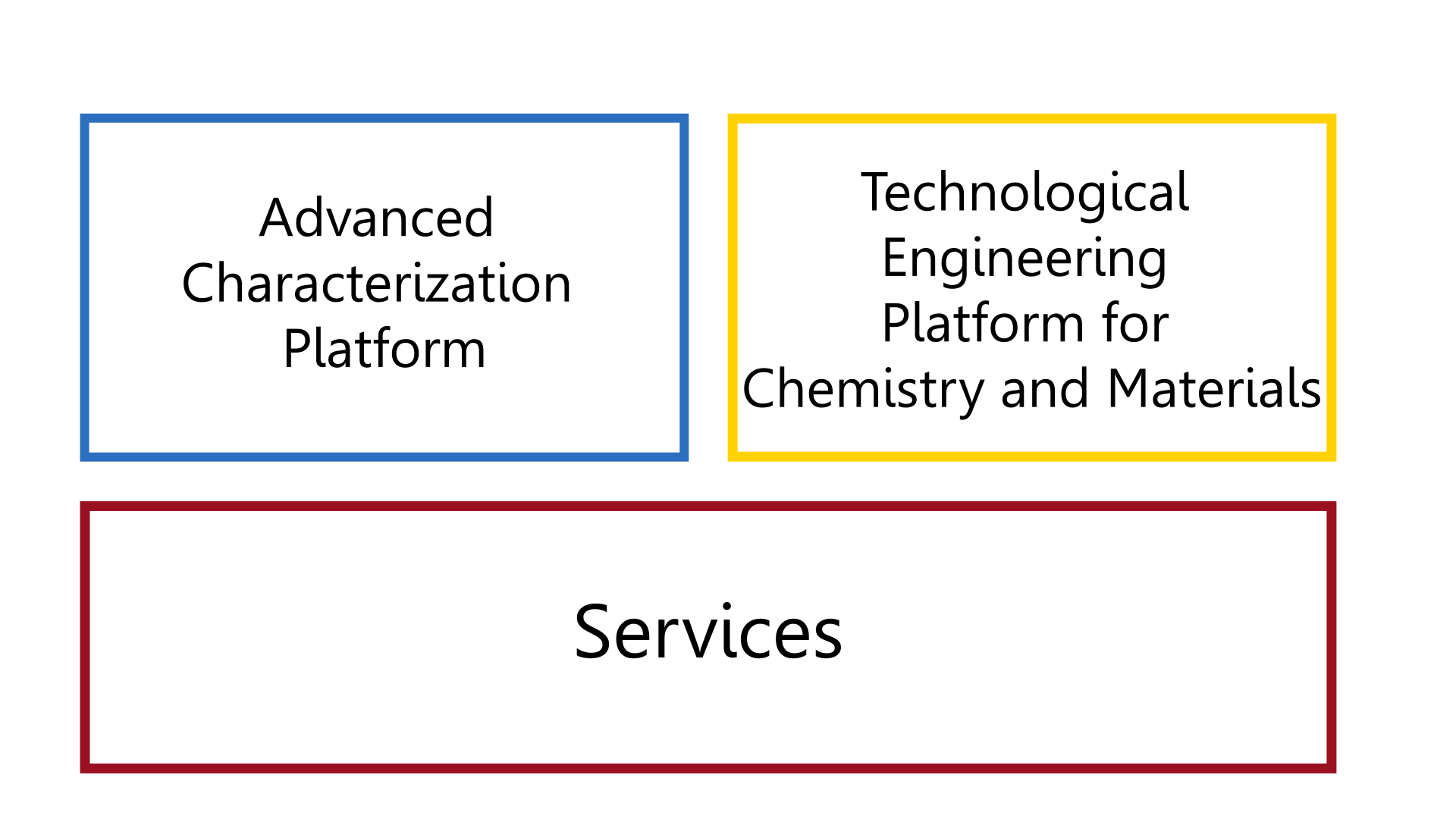
The Chevreul Institute was created from a desire to pool human and instrumental resources from units in the “Chemistry and Materials” sector of the University of Lille. These resources particularly include an Advanced Characterization Platform (PCA) and a Technological Engineering Platform for Chemistry and Materials (PTICM). This pooling has also recently been extended to transversal services.
The Chevreul Institute is regularly entrusted with federative missions, whether in terms of representing the “chemistry and materials” sector when necessary, or leading large structuring projects (CPER projects).
Description of the UAR
The Chevreul Institute provides a set of shared services for its associated research units (LASIRE, UCCS and UMET), and on a broader scale for activities related to the platforms.
In addition to these platforms, the Institute includes:
- A general administration and financial management service
- A technology transfer and innovation service
- A communication and scientific outreach service
- An experimental development support service
- An information systems security service (ISS)
The Institute’s building also offers meeting rooms and an amphitheater for organizing seminars and scientific events.
Research Areas
Research projects and themes are collectively led within the scope of the Chevreul Institute, following a federative model. They fall within the following areas:
- Selective activation and control of chemical reactions
- Eco-design
- Functionality, properties and performance
- Recycling
- Advanced characterization and modeling
Governance
Management Team:
Director (Hugues Leroux), Deputy Director (Pascal Roussel), and Administrative Manager (Fabien Carrette-Legrand).
Steering Committee:
Composed of the management team, the directors of the supported laboratories, a representative of the operational committee, and representatives of the supervising institutions.
Executive Committee:
Composed of the management team, the directors of the supported laboratories, and a representative of the operational committee.
Operational Committee:
Composed of representatives from the services, the PCA platform, and the PTICM platform.
Supported Units
Institute Presentation Video
This video is a presentation of the Chevreul Institute
The Michel-Eugène Chevreul Institute is a research federation bringing together four research units of the University of Lille working in the fields of chemistry and materials science. Its activities are organized around four main objectives:
- Bringing together stakeholders in the field and increasing its visibility
- Pooling technical and human resources to develop shared platforms and tools
- Promoting the emergence of new research topics
- Leading major scientific and equipment projects
The Chevreul Institute includes approximately:
- 250 researchers and faculty members
- 125 research support staff
- 190 PhD students
- 35 postdoctoral researchers
The main research themes developed within the Institute’s laboratories include:
- Synthesis, processes, and transformations
- Functional materials of the future
- Eco-design and recycling of materials
- Modeling and simulation
- Advanced characterization
Within the framework of the State–Region Plan 2021–2027, the Chevreul Institute leads and coordinates the CHEMACT project (CHemistry and Materials at the Crossroads of Transitions). This structuring project, funded with approximately €11 million, aims to develop sustainable solutions for the design of new materials with targeted functionalities that are both high-performance and recyclable.
The Chevreul Institute also hosts and coordinates the activities of two platforms in the “Chemistry–Materials” sector:
Advanced Characterization Platform (PCA)
The Advanced Characterization Platform mainly supports research activities. It is composed of eight specialized units bringing together a wide range of structural and chemical characterization techniques.This platform is recognized nationally and internationally for the high technical level of its instruments as well as for the expertise and know-how of its staff. Some of its units are part of national and international research infrastructures. Investments in this platform amount to nearly €36 million, and 34 engineers and technicians ensure its operation.
Technical Engineering Platform for Chemistry and Materials
The Technical Engineering Platform for Chemistry and Materials consists of five instrumental units and aims to provide services to socio-economic partners in the fields of: Catalysis, Formulation, Powder technologies, Fire resistance of materials. It relies on a state-of-the-art instrumentation fleet combined with internationally recognized scientific expertise and support. Investments of approximately €10 million have been made in this platform, and six engineers and technicians ensure its operation.
The Chevreul Institute has a 2,850 m² building housing part of the platforms as well as shared research facilities designed for collaborative use. A 150-seat auditorium, two meeting rooms, and a social and networking area allow the organization of scientific conferences and receptions. The Chevreul Institute therefore represents a major research hub in the field of Chemistry and Materials, recognized both nationally and internationally.
The researchers and staff involved work daily to develop research aimed at supporting current and future transitions, addressing the major and complex challenges facing our society.